1. Introduction — The Ocala Mold Challenge
If you’ve lived in Ocala for more than one summer, you already know what the air feels like in August. Stepping outside is like walking into a warm, wet towel. The humidity doesn’t just make you uncomfortable it quietly works on your home every single day, seeping into walls, settling into corners, and setting the stage for one of the most stubborn problems Florida homeowners deal with: mold.
Ocala sits in the middle of Marion County, surrounded by the Silver River, the Ocklawaha River basin, and some of the most ecologically rich wetlands in Florida. That proximity to water, combined with a naturally high water table under a lot of the county, means the ground itself holds moisture year-round. Add in the older housing stock across neighborhoods like Silver Springs Shores, Pine Run, and Ocala Palms, many built in the 1970s and 1980s before modern moisture management was written into building codes and you’ve got conditions that are almost ideal for mold growth.
Florida ranks among the top states in the country for mold risk. In 2022 alone, an estimated 264,000 mold-related insurance claims were filed across the state over 20% of all home insurance claims that year. That’s not a coincidence. It’s what happens when warm temperatures, humidity above 70%, and frequent heavy rainfall collide inside buildings that weren’t always designed to handle them.
The good news is that mold is manageable. You don’t need to move to a drier state or spend a fortune on remediation every few years. What you do need is the right information specific to where you actually live not generic advice written for somewhere in the Midwest. This guide is built specifically for Ocala homeowners, renters, and property managers who want to understand the problem, prevent it proactively, and know exactly when to stop DIYing and call a professional.
2. Understanding Mold — What It Is & Why It’s a Threat
Mold is a type of fungus. It reproduces by releasing microscopic spores into the air, and those spores are absolutely everywhere including inside your home right now, floating in the air you’re breathing. Under normal dry conditions, they’re harmless. They land, find nothing hospitable, and nothing happens. But the moment they land somewhere warm, damp, and with a little organic material to feed on wood framing, drywall paper, dust, even certain paints they settle in and start colonizing.
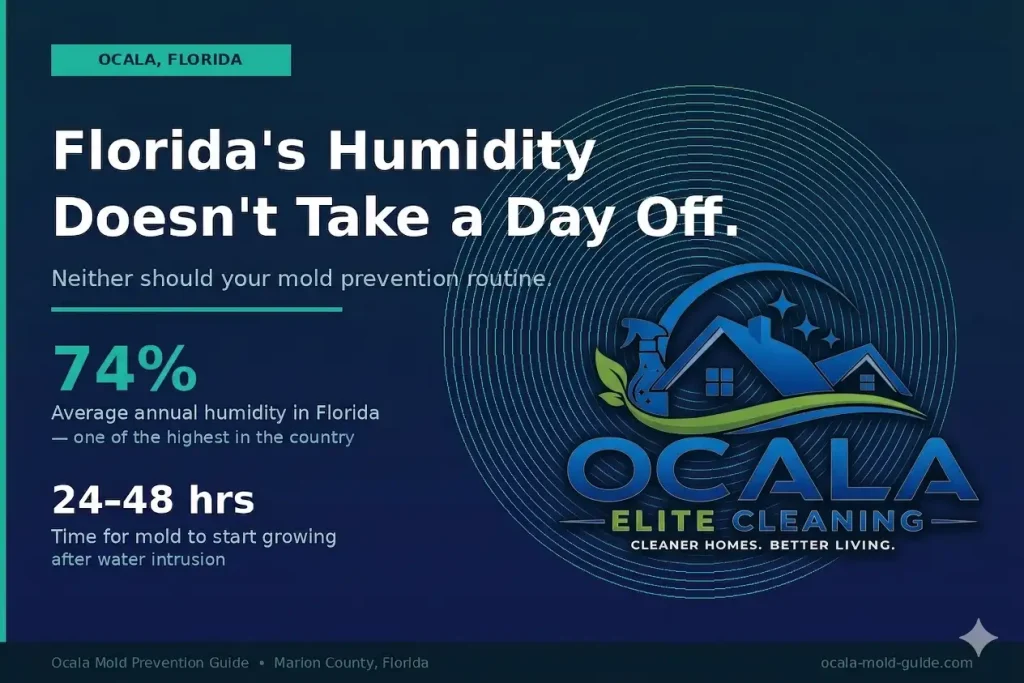
In Ocala’s climate, the window between “a little damp” and “active mold growth” is very short. Mold can begin developing within 24 to 48 hours of sustained moisture exposure. Many homeowners reduce moisture buildup with more frequent recurring cleanings. Here’s what house cleaning costs in Ocala if you’re considering routine help. That’s why a slow drip under a sink, a small roof leak after a storm, or even consistently high indoor humidity can become a visible mold problem faster than most people expect.
The health side
Mold exposure affects people differently depending on their sensitivity. For most healthy adults, minor exposure causes mild symptoms a stuffy nose, itchy eyes, some throat irritation. But for children, the elderly, and anyone with asthma, allergies, or a compromised immune system, the effects can be significantly more serious. Chronic mold exposure has been linked to persistent respiratory inflammation, worsening asthma attacks, sinus infections that keep coming back, skin rashes, and fatigue.
Certain mold species carry extra risk. Stachybotrys chartarum commonly called black mold produces mycotoxins that, with prolonged exposure, have been associated with neurological symptoms in severe cases. This is a less common species than the green or white molds you might spot on a grout line, but it does show up in Ocala homes, particularly in areas that have experienced water damage and been slow to dry out.
The property side
Beyond health, mold does real structural damage. It breaks down the organic materials it feeds on which includes the wood framing and drywall that make up your walls. A slow, undetected mold colony inside a wall cavity can compromise structural integrity over months and years. It destroys insulation, ruins flooring, and leaves permanent staining on surfaces. In the Florida real estate market, a history of mold damage or visible mold at the time of a home inspection can dramatically reduce a property’s value or kill a sale entirely.
One important thing to understand: by the time you can see mold on a surface, it’s usually been growing for a while. The visible patch is rarely the whole picture.
3. Common Causes of Mold in Florida Homes
Mold needs four things to grow: warmth, moisture, oxygen, and something organic to feed on. In Ocala, you’ve got warmth and oxygen year-round, guaranteed. The moisture is the variable and it comes from more places than most homeowners realize.
High outdoor humidity seeping indoors
Florida’s average annual humidity sits around 74%, and in Ocala it climbs even higher during the summer rainy season regularly hitting 85–90% outdoors in July and August. Every time you open a door or window, every gap in your weatherstripping, every unsealed penetration in your walls is an opportunity for that humid outdoor air to migrate inside. Without active dehumidification, your indoor relative humidity can creep into the 60–70% range, which is exactly where mold thrives.
AC system that isn’t pulling its weight
Your air conditioning system does two jobs in Florida: it cools the air and it removes moisture from it. When your AC is properly maintained and running consistently, it keeps indoor humidity in check almost automatically. When it isn’t clogged evaporator coil, dirty air filter, full condensate drain pan, low refrigerant it may still cool your home but it stops dehumidifying effectively. Warm, moist air lingers, and mold spores have everything they need. If buildup has already spread through vents, bathrooms, or neglected areas, many homeowners look into deep cleaning services in Ocala.
In Ocala’s climate, a neglected AC system doesn’t just cost you more on your utility bill. It actively creates conditions for mold to grow inside your home.
Hidden plumbing leaks
A slow drip under the kitchen sink, a weeping fitting behind the washing machine, a hairline crack in a supply line inside the wall none of these feel urgent until you open a cabinet one day and find everything coated in mold. In Florida’s heat, even a small sustained plumbing leak can generate enough moisture in an enclosed space to produce a significant mold colony in as little as a week or two. The problem is that these leaks are often invisible until the mold is already well-established.
Poor ventilation in bathrooms and kitchens
A 10-minute hot shower deposits several pints of water vapor into the air. A pot of pasta boiling on the stove does the same. If your bathroom exhaust fan is undersized, not venting to the exterior, or if you’re not running it long enough after a shower, that moisture has nowhere to go. It settles on walls, ceilings, and in grout lines. Over time, this is one of the most consistent causes of bathroom mold in Ocala homes and one of the most preventable.
Roof and window vulnerabilities
Florida’s hurricane season runs from June through November, and Ocala gets its share of heavy storms even when it’s not in a direct hurricane path. Each major rain event puts pressure on aging roofing materials, deteriorated flashing, and window seals that have been baked by years of Florida sun. A small roof leak can spread moisture through attic insulation before a single drip ever reaches your ceiling. Window condensation from cracked seals, particularly in older aluminum-frame windows, creates a reliable moisture source right where walls meet frames.
Slab foundations and crawl spaces
Many Ocala-area homes are built on concrete slab foundations or have crawl spaces that sit close to Florida’s naturally high water table. Concrete is porous it wicks ground moisture upward into flooring and lower wall sections over time, especially in areas near the Silver River or in low-lying parts of the county. Homes with crawl spaces are particularly vulnerable if the vapor barrier is old, torn, or was never properly installed. Ground moisture evaporates up into the crawl space, raises humidity throughout the lower portion of the home, and creates persistent conditions for mold.
4. Proactive Mold Prevention — Step-by-Step How-To
Prevention is almost always cheaper and less disruptive than remediation. Here’s a practical, Ocala-specific guide to building the habits that actually keep mold out.
Step 1 — Control indoor humidity (target 30–50%)
This is the single most important thing you can do. Pick up a digital hygrometer they cost $10 to $15 at most hardware stores and place one in your main living area, one in your bedroom, and one in any room you suspect might run damp, like a laundry room or bathroom. Check them weekly.
If you’re consistently seeing readings above 55%, your current setup isn’t keeping up. You’ll need either a dedicated dehumidifier for the problem room, or a conversation with an HVAC technician about whether your system has the capacity for Ocala’s climate. Some older systems simply weren’t sized for the moisture load that Florida summers demand.
Step 2 — Maintain your AC system monthly
In most of the country, people check their AC once a year. In Ocala, monthly maintenance is the correct baseline. Every month: inspect and replace the air filter if it’s dirty. Every three months: check the condensate drain line and drip pan for standing water or algae buildup. Flush the drain line with a cup of white vinegar to prevent clogs. Once a year: schedule a professional HVAC service that includes cleaning the evaporator coil and checking refrigerant levels.
A well-maintained, consistently running AC system is the most powerful mold prevention tool you have in a Florida home. Don’t let it become the source of the problem.
Step 3 — Run exhaust fans properly (15–20 min after every shower)
The rule most people don’t follow: your bathroom exhaust fan needs to run during the entire shower and for at least 15 to 20 minutes afterward. That’s when the bulk of the moisture suspended in the air actually gets cleared. Turning it off the moment you step out of the shower leaves most of that vapor sitting in the room.
Also confirm your fans are actually venting to the outside. In some older Ocala homes, exhaust fans were installed venting into the attic rather than through the roof or a soffit which just moves the moisture problem from one space to another. If you’re not sure, have an HVAC contractor check the ductwork routing.
Step 4 — Inspect for leaks every 3 months
Set a calendar reminder and do a thorough leak inspection every quarter. Check under every sink in the house, around the base of each toilet, along the edges of the tub and shower, at the water heater connections, at the washing machine supply lines, and anywhere you have shutoff valves. Outside: walk the roofline after any significant storm and look for lifted shingles, damaged flashing around chimneys or vents, or any spots where the roof surface looks compromised.
Finding a slow drip or weeping fitting early before it has weeks to work on the wood and drywall around it — is one of the highest-ROI things you can do as a Florida homeowner.
Step 5 — Seal weatherstripping and window caulk annually
Florida’s heat and UV exposure degrade weatherstripping and exterior caulk faster than in cooler climates. Each year, do a full walkthrough of every exterior door and window. Press your hand against the edges on a warm day you can often feel warm air leaking in through gaps even before you can see them. Any weatherstripping that’s cracked, compressed flat, or pulling away should be replaced. Any window caulk that’s cracked or missing should be reapplied. This single habit reduces both mold risk and your utility bills.
Step 6 — Improve drainage around your foundation
Walk your property after a heavy rain and watch where water goes. If it’s pooling against the foundation, running along the base of exterior walls, or draining toward the house instead of away from it, that ground moisture is your enemy. The fix is usually straightforward: re-grade the soil immediately surrounding the foundation so it slopes away from the house at about one inch per foot for the first six feet. Make sure gutters and downspouts are clear and that your downspout extensions direct water at least four feet away from the foundation.
Step 7 — Use mold-resistant materials when renovating
If you’re redoing a bathroom, a laundry room, or any below-grade space, the material choices you make now pay off for years. Use mold-resistant drywall (sometimes sold as “green board” or “purple board”) instead of standard drywall on any wall that will be near moisture. Use cement board behind tile in showers. Apply a mold-inhibiting primer before painting in bathrooms and kitchens. Choose tile, luxury vinyl plank, or concrete flooring over carpet anywhere moisture is a regular presence carpet in a Florida bathroom or laundry room is practically an invitation for mold.
5. DIY Mold Cleaning Tips — Minor Issues
If you’ve found a mold spot that’s smaller than roughly 10 square feet, it’s on a non-porous or semi-porous surface, and the underlying moisture source has been identified and fixed that’s a job you can handle yourself. Here’s how to do it without spreading the problem. If the issue keeps returning, compare deep cleaning costs in Ocala before hiring help.
What you need before you start
An N95 respirator mask (not just a basic dust mask), nitrile rubber gloves, safety glasses, a stiff-bristle scrub brush, a spray bottle, old rags or disposable paper towels, and a heavy-duty garbage bag to seal everything in when you’re done. Don’t skip the protective gear even non-toxic mold species release spores when disturbed, and you don’t want to be inhaling them.
Choosing your cleaning solution
For tile, sealed grout, glass, fiberglass, and other non-porous surfaces: undiluted white vinegar is effective, non-toxic, and genuinely kills most mold species on contact. Spray it on, let it sit for a full hour, then scrub and wipe clean. It smells strong while wet but the odor dissipates as it dries.
For tougher spots or slightly porous surfaces like unsealed grout: try a paste made from baking soda and a small amount of water, or a solution of tea tree oil diluted at about one teaspoon per cup of water. Tea tree oil is naturally antifungal and safe around pets and children once dry.
For commercial options: look for EPA-registered mold and mildew cleaners at any hardware store. Read the label and follow the dwell time instructions most need to sit on the surface for several minutes to work. Avoid mixing anything with bleach unless you’re certain what you’re combining it with. Bleach and ammonia together produce toxic chloramine gas. Bleach and vinegar together just neutralize each other and neither works effectively.
Step-by-step cleaning process
Open windows in the room for ventilation before you start. Put on your full protective gear. Apply your chosen cleaning solution and let it sit for the full recommended dwell time don’t rush this step. Scrub from the outer edges of the mold patch inward, to avoid pushing spores outward into clean areas. Wipe the surface clean with a damp cloth, then dry the area completely a fan or dehumidifier pointed at the surface helps. Place all used rags and disposable materials into the garbage bag immediately, seal it, and take it outside. Do not leave used cleaning cloths sitting in the room.
What not to do
Never dry brush or vacuum a moldy surface without a HEPA-filtered vacuum a regular vacuum will blow spores throughout the room. Never paint over mold without fully killing and removing it first; the mold will grow right through the paint within weeks. And don’t assume the job is done just because the surface looks clean if the underlying moisture source hasn’t been addressed, mold will return to that same spot, often faster than the first time.
6. When to Call the Professionals
There’s a real cost to calling in a professional mold remediator, and nobody wants to spend money they don’t have to. But there are situations where DIY isn’t the right call and trying to handle them yourself can make things significantly worse.
Call a licensed mold remediation specialist if any of the following apply:
The affected area is larger than 10 square feet. Mold inside your HVAC system or ductwork this requires professional containment and equipment to avoid spreading spores throughout the entire home. Any situation where you’ve had significant water intrusion (flooding, a burst pipe, a major roof leak) and suspect mold may have grown inside walls, under flooring, or in the ceiling cavity. Family members experiencing persistent respiratory symptoms, headaches, or fatigue that improve noticeably when they’re outside the home. Mold that returns to the same area after you’ve cleaned it this almost always means the moisture source is still active and located somewhere you haven’t been able to reach. And if you’re preparing to sell the property, getting a certified mold inspection report is often worth the cost to avoid complications at closing.
How to hire the right person in Ocala
In Florida, mold assessors and mold remediators are licensed separately by the Florida Department of Business and Professional Regulation (DBPR). Always verify a contractor’s license before hiring, you can do this in minutes at myfloridalicense.com. Be cautious of any company that offers to both assess the mold and do the remediation themselves; Florida law generally requires these to be separate entities specifically to prevent conflicts of interest.
For a contained remediation job in the Ocala market, expect to pay somewhere in the $500 to $3,000 range depending on the size and location of the affected area. Jobs that involve opening walls, treating subfloor, or decontaminating HVAC systems can run significantly higher. Get at least two quotes before committing, and ask each contractor to walk you through their containment protocol proper containment is what prevents spores from spreading to unaffected areas during the work.
7. Ocala-Specific Resources & Local Considerations
Generic mold advice is useful, but Ocala has some specific factors that are worth knowing if you’re serious about keeping your home protected.
Older neighborhoods and pre-code construction
A significant share of Ocala’s housing stock was built between the 1970s and the early 1990s before Florida’s current building codes addressed moisture management in any meaningful way. Homes in Silver Springs Shores, Pine Run, Ocala Palms, and parts of northwest Ocala near the historic district often have original windows, original insulation, and ventilation systems that weren’t designed for the performance standards we’d expect today. If your home falls in this category, it’s worth doing a more thorough baseline inspection of your attic insulation, crawl space vapor barrier, and original window seals, not because there’s definitely a problem, but because these are the places where issues are most likely to be hiding.
Water table and proximity to waterways
Eastern and southern portions of Marion County, particularly areas near the Ocklawaha River, Silver River, and the network of lakes and wetlands in that part of the county sit on ground that holds significantly more water than drier inland areas. Homeowners in these zones should pay extra attention to foundation moisture and consider whether a sump pump makes sense for any below-grade or crawl space areas. Even homes on higher ground in these areas can experience elevated ground moisture through much of the year.
Hurricane season and storm response
Ocala isn’t on the coast, but it still sees significant rainfall from tropical systems that come across the state. The Florida Division of Emergency Management recommends inspecting your home within 24 to 48 hours after any significant storm. That window matters because mold can begin growing within 24 hours of sustained moisture exposure and a small area of water intrusion caught and dried out within two days almost never becomes a serious mold problem. The same water intrusion left for a week almost always does.
Local resources
Marion County residents can contact the UF/IFAS Marion County Extension Office at (352) 671-8400. They offer free guidance on home maintenance in Florida’s climate and can connect you with resources for low-income homeowners dealing with housing-related moisture and mold issues. For licensing verification of any mold contractor, use the Florida DBPR’s online search at myfloridalicense.com.
8. Ocala Home Mold Prevention Checklist
Use this checklist to stay ahead of mold year-round. Print it out and stick it somewhere you’ll actually see it.
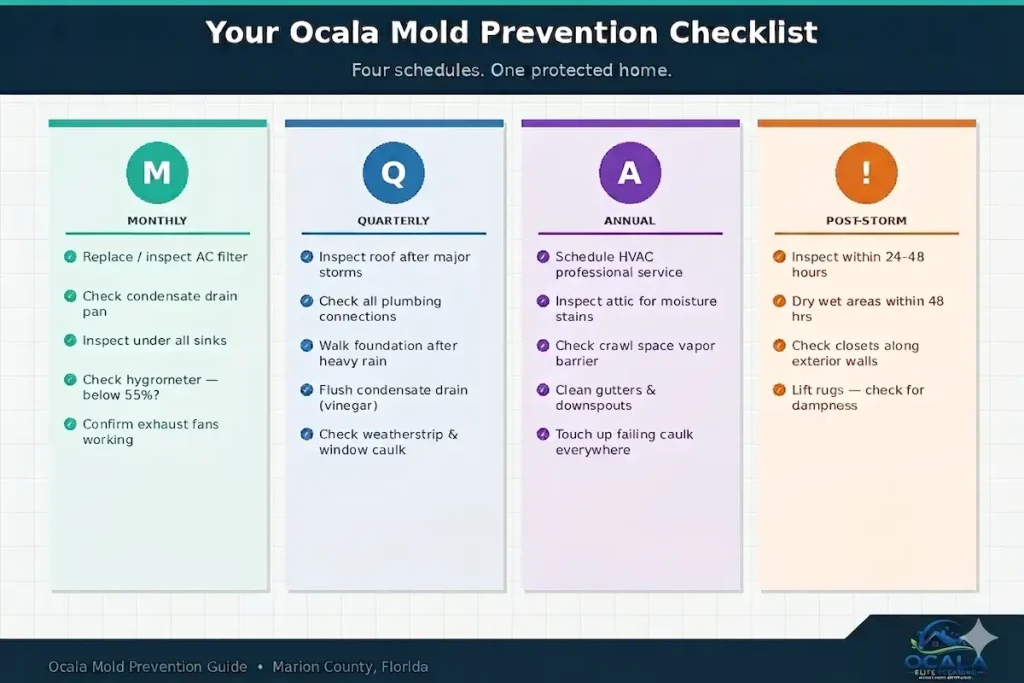
Monthly tasks
☐ Replace or inspect AC filter
☐ Check condensate drain pan for standing water or slime buildup
☐ Run a quick inspection under all kitchen and bathroom sinks
☐ Check hygrometer readings — staying below 55% indoors?
☐ Confirm exhaust fans are running properly and venting to exterior
Quarterly tasks
☐ Inspect roof visually after any major storm — look for lifted shingles or damaged flashing
☐ Check all plumbing connections including water heater fittings and washing machine lines
☐ Walk the foundation perimeter after heavy rain and look for pooling water
☐ Flush condensate drain line with a cup of white vinegar
☐ Check weatherstripping and window caulk for gaps, cracking, or separation
Annual tasks
☐ Schedule professional HVAC service — coil cleaning, refrigerant check, full inspection
☐ Inspect attic for moisture stains, daylight gaps, or discolored insulation
☐ Check crawl space vapor barrier for tears, displaced sections, or standing moisture
☐ Clean gutters and downspouts and verify proper drainage away from foundation
☐ Touch up failing caulk in bathrooms and around all exterior wall penetrations
After any major storm or flooding
☐ Inspect within 24–48 hours — don’t wait to see if something shows up
☐ Dry out any wet areas within 48 hours using fans and dehumidifiers
☐ Check inside closets and cabinets along exterior walls — moisture hides there
☐ Lift area rugs and check flooring underneath for dampness or discoloration
9. Conclusion & Ongoing Vigilance
Mold is one of those problems that rewards the people who take it seriously before they have a crisis, and punishes the ones who wait until there’s a visible patch on the wall. In Ocala’s climate, the conditions for mold are present every single day of the year. That’s not a reason to panic, it’s just the reality of living here, and once you understand it, it’s entirely manageable.
The four core habits that will do most of the work: keep your indoor humidity below 55% with a working dehumidifier and a properly maintained AC system; fix leaks the moment you find them, not when you get around to it; run your exhaust fans long enough to actually clear moisture out of bathrooms and kitchens; and do your seasonal inspections so you catch problems early instead of discovering them when they’ve become expensive.
If you ever find yourself looking at a mold patch that’s bigger than a piece of paper, or if anyone in your household is having persistent health symptoms that can’t be explained, don’t try to handle it with a spray bottle and some vinegar. Call a licensed mold remediation specialist in Ocala, get a proper assessment, and deal with it the right way. The cost of professional remediation is almost always less than the cost of ignoring the problem for another six months.
Florida’s humidity isn’t going anywhere. But with the right approach, your home can handle it without becoming a casualty of it. If you’d rather stay ahead of mold before it becomes expensive, schedule professional cleaning services in Ocala.